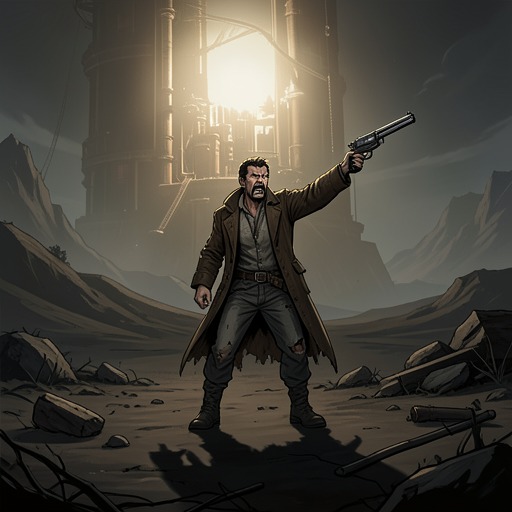
Clan Tornok
Systema Delenda EstClan Tornok is one of the System’s major clan powers, an organization whose influence extends from the Core Worlds into the frontier through rank, armed force, administration, and access to advancement. It is not merely a family name or ceremonial affiliation: its protection has practical limits, its prestige must be backed by force, and its members participate directly in the System’s quests, assassinations, diplomatic maneuvering, and struggles over worlds such as Sydea.
Structure and Sources of Authority
Clan Tornok’s social power is visibly stratified by rank. When Grand Paladin Nikhil escorts young Copper-rank members toward Sydea, he warns them that Ikent is not a Clan Tornok world and that locals will respect no strength except their own. The admonition exposes the clan’s central political principle: a clan name provides security only as far as its force of arms can enforce it. Nikhil, a Bismuth-rank figure, accompanies the children because he is powerful enough to deter local challenges without appearing so overwhelming that a greater power must take notice. The expedition is deliberately kept inconspicuous. Clan Tornok has sent important new rankers toward the frontier, but other clans must not be allowed to wonder what has attracted such attention. The young Coppers are expected to pass as ordinary members of their rank while tolerating the frontier’s reduced luxury. Their journey therefore combines education, concealment, and strategic deployment: the clan is extending its reach while attempting not to advertise the importance of its interest in Sydea.
Frontier Intervention and Intelligence
Clan Tornok’s involvement in Sydea begins through information rather than open occupation. A Copper brings Nikhil a remarkable account of events on the world, and although Nikhil suspects exaggeration, deception, or misunderstanding, his Skills confirm that the informant is not lying. He rewards the report with Platinum Essence Tokens, D-tier Universal Skill Tokens, and four Silver-tier Equipment Tokens. The scale and specificity of the payment show that information is itself a clan resource, while Nikhil’s immediate decision to prepare before crossing into Sydea shows how the clan converts rumor into calculated intervention. The same incident also places Clan Tornok within a wider political network. When Marus learns that the relevant Bismuth is Grand Paladin Nikhil Tornok, he recognizes that Clan Tornok is not administered by Clan Eln. Any approach therefore requires messages, conciliatory gifts, and a measure of protection for Nikhil. The exchange makes the clan’s autonomy explicit: it is powerful enough to demand diplomatic handling even from other high-ranking powers, and its internal authority cannot simply be overridden by a neighboring clan. Nikhil ultimately presents the Sydean crisis as a religious and political correction. Addressing the people of Sydea, he claims that their Platinums have violated the dictates of the divine System by inviting Cato to become their lord and master, and that the gods have sent him to restore proper order. The accusation is also an intelligence victory for Clan Tornok, because it relies on testimony from Muar, a Copper whose warning has been elevated by divine and clan authority into the justification for intervention.
Military and Covert Operations
Clan Tornok’s power is expressed through specialized violence. During the confrontation on Sydea, Nikhil’s presence gives the clan’s expedition the protection of a Bismuth, while Tornok-aligned Golds and other operatives engage the Sydean defenders. Ramshel, a Tornok Clan Gold, is killed when an assassin’s blade erupts through his neck. Raine immediately exploits the opening, driving Cato’s weapon into Anhir’s armor and crippling him. The scene demonstrates both the lethality of Tornok’s personnel and the vulnerability hidden beneath clan prestige: rank can intimidate, but it cannot prevent a precisely executed attack. The clan also operates through the Assassin’s Guild and through targeted pursuit across multiple worlds. Dyen observes that Tornok-Clan members are especially common on worlds near the sprawl controlled by the clan, just beyond the Core Worlds. Many of the assassins hunting Raine and Leese are associated with Clan Tornok, yet the source of the information locating the sisters remains uncertain. The sisters stand out as the only Sydeans in many places, but Dyen suspects that information is being purchased and resold, possibly by Guild members unwilling to confront them directly. Clan Tornok’s reach thus appears not as a single visible army but as a distributed network of contracts, informants, and mobile killers. One such attack reveals the tactical sophistication of the clan’s opponents and the scale of the conflict it has helped create. A Tornok archer fires a seeking arrow from half a mile away, sending a lightning-charged projectile toward the battlefield, while other Tornok assassins use aerial attacks, casters, armor, and coordinated Skills. Cato’s warframes, Raine, Leese, and Dyen destroy the attackers in less than ten seconds, but the speed of the assault and the variety of its participants establish Clan Tornok as an organization capable of fielding formidable, specialized forces across worlds.
Political Conflict and Institutional Logic
Clan Tornok is also implicated in disputes over who may benefit from frontier worlds. In a debate concerning War-World Osk and the Great Radiance Dungeon, a large, many-limbed deity resembling Clan Tornok argues that the System’s rules should not change merely because another group has become unusually effective. The speaker supports the Ahruskian presence because he is satisfied with the behavior that produces essence, while other deities object that the Ahruskians are disrupting the balance of the War-World and killing Azoths. The exchange places Tornok-like power within the System’s broader political economy: the central issue is not abstract justice, but who controls quests, dungeons, and the essence generated by them. The clan’s position is further clarified by the System’s history. Initik remembers the System arriving while he was still hunting for food, before his people practiced agriculture or settled into organized cultivation. From that moment, the System ended hunger and wandering while directing social development through its own rewards and rules. Clan Tornok belongs to the mature hierarchy produced by that intervention. Its rank structure, clan protection, frontier expeditions, and reward practices are not external alternatives to the System; they are institutions that have learned to thrive inside it. At the highest level, the clan is one of the Nine Great Clans summoned by Misse when she assumes the authority of a True Deity. Misse tells the clan heads that the System, rather than the Nine Great Clans, must become the focus of collective effort, then argues that Cato has compromised the frontier and is draining essence from infected worlds. Her proposed solution is to sever the frontier. Clan Tornok therefore stands among the established powers whose territorial arrangements and privileges are threatened by the crisis, even as those same arrangements helped produce the inertia and rivalry that make unified action difficult.
Narrative Significance
Clan Tornok embodies the System’s fusion of family privilege, bureaucratic advancement, and organized violence. Its name can protect a Copper only where the clan’s strength is recognized; its Bismuths can impose order without attracting the notice of greater powers; its rewards turn information into loyalty; and its assassins extend policy through deniable force. The organization’s authority is therefore both impressive and conditional, depending on continual demonstrations that rank, weapons, and connections remain meaningful. Its contrast with Cato is especially important. Cato’s forces use improvised organic technology, remote warframes, orbital weapons, and unconventional communications to evade the System’s technological restrictions, whereas Clan Tornok operates through the recognized channels of rank, quests, clan identity, and Guild violence. Yet the two systems are not opposites in every respect: both coordinate distant agents, convert knowledge into power, and seek influence across worlds. Clan Tornok represents the old institutional order defending its inherited advantages; Cato represents an external method that makes those advantages newly contestable. The clan’s ultimate significance lies in this tension between stability and predation. It offers protection, advancement, and political identity, but each benefit is conditional on obedience to a hierarchy whose reach is maintained by force. As the System approaches collapse and the Nine Great Clans confront the possibility of losing control of the frontier, Clan Tornok’s authority becomes a measure of the old order’s vulnerability: powerful enough to intervene almost anywhere, yet unable to guarantee that its name, contracts, or rank will survive a conflict that is changing the rules beneath it.